There comes a moment in every editor’s life when the music stops being a polite background guest and starts rearranging the furniture. One minute you’re cutting picture to serve the story; the next, a particularly bossy bassline has seized the timeline, demanded that every transition land on the downbeat, and is currently holding your carefully planned emotional arc hostage until the drop. In 2026 this is no longer a rare mutiny. Audio-driven tools can now generate motion, timing, and even scene structure directly from a track. So the question is no longer theoretical: should music dictate the pace of your video? Sometimes yes. Sometimes the soundtrack should be politely shown the door.
Music earns the director’s chair when the piece is fundamentally rhythmic or emotional rather than informational. Think music videos, social loops, branded content built around a licensed track, kinetic typography pieces, or any short-form work where the feeling arrives before the facts. In these cases the audio already carries the emotional architecture. Letting it set the pace creates an almost physical lock between picture and sound that audiences feel in their chest before they understand it with their heads. Modern audio-to-video models and beat-sync tools have made surrendering editorial control almost embarrassingly easy. Drop in a track and, within moments, the software is suggesting cuts, camera moves, intensity shifts and presumably demanding its own parking space. The craft then becomes deciding which of those suggestions actually serve the idea instead of merely illustrating the waveform.
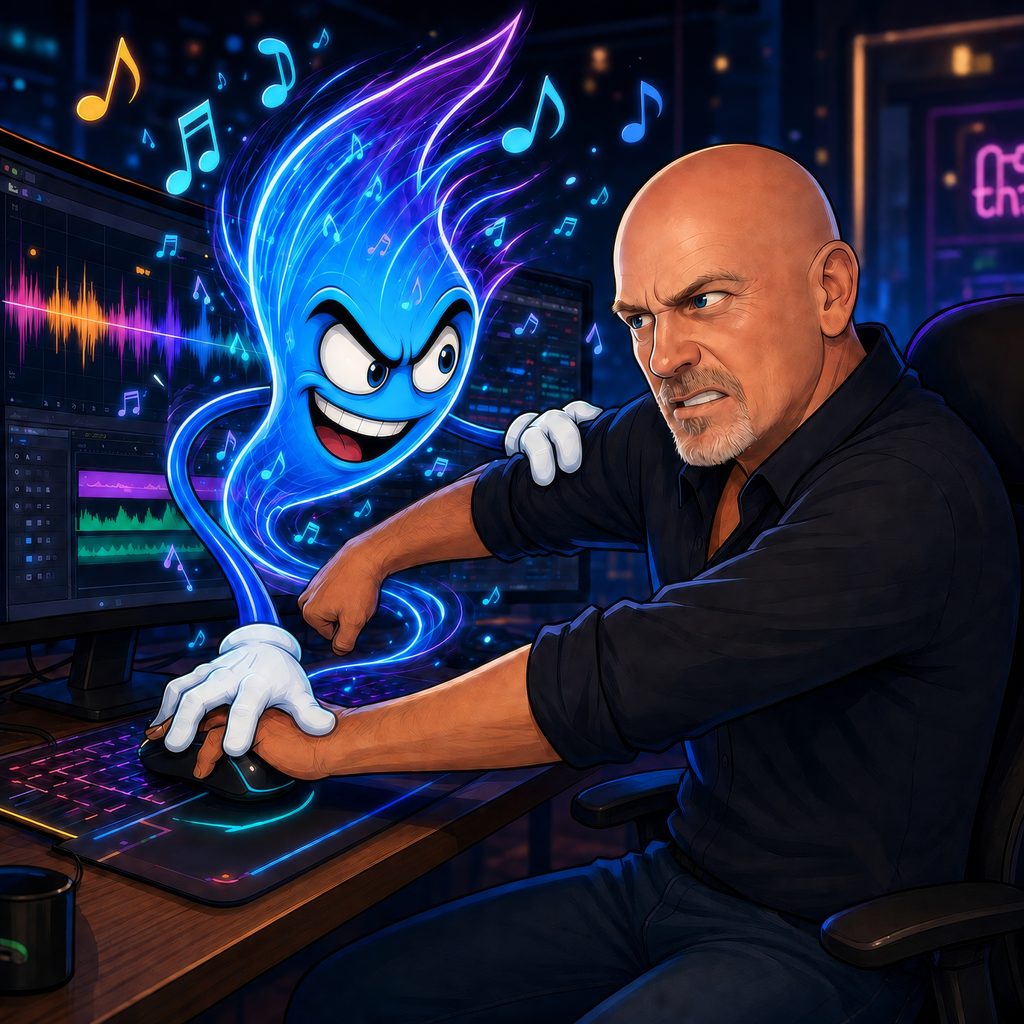
How you hand over control matters. Start with the finished or near-finished track rather than a temp bed. Map the major structural points—intro, build, drop, breakdown, resolution—before you touch a single clip. Cut to the energy, not just the kick drum; a mechanical “cut on every beat” approach gets old quickly, and eventually the audience stops watching the video and starts wondering whether the editor is being held at gunpoint by a drummer. Leave space. Silence or a held shot against a rising musical phrase can land harder than another flashy transition. And keep a human veto: if the music wants a cut that destroys the emotional logic of the picture, the music loses. Tools can now drive the motion; they still cannot feel whether the audience needs to breathe.
There are equally clear moments when the soundtrack must sit down and shut up. Dialogue-heavy pieces, explanatory content, documentary sequences, and anything where the primary information lives in the picture or the spoken word usually suffer when music dictates the cut. In those cases the old rule still holds: build the edit so it works dry, then introduce music as support rather than commander. If the picture only “works” once the track is loud, the story is probably undercooked. Music can still shape intensity and transitions, but it should follow the narrative rhythm rather than invent one of its own.
In short, treat the soundtrack the way we have learned to treat AI: as a powerful, occasionally overconfident partner rather than the hero of the production. When the music has a stronger emotional map than the picture, let it lead. When the story needs to breathe or explain, put the track in its place. The best results come from knowing which situation you’re actually in—and having the spine to look at a particularly aggressive bassline straight in the waveform and say, “Thank you. Your services will no longer be required on this timeline.”